SERVICES

Airport Markings

Airfield marking work for runways, taxiways, and ramps — installed to FAA  standards by crews trained for the specialized environment.

WHAT IT IS

Airport markings, done right.

Airport markings are governed by FAA standards, and every line, symbol, and threshold has to meet exact specifications for dimensions, retroreflectivity, and color. We've been doing airfield work for nearly two decades and know the standards inside and out.

This page covers our general airport marking work. For high-performance AirMark® specialty installations (a separate certified product), see our AirMark® page.
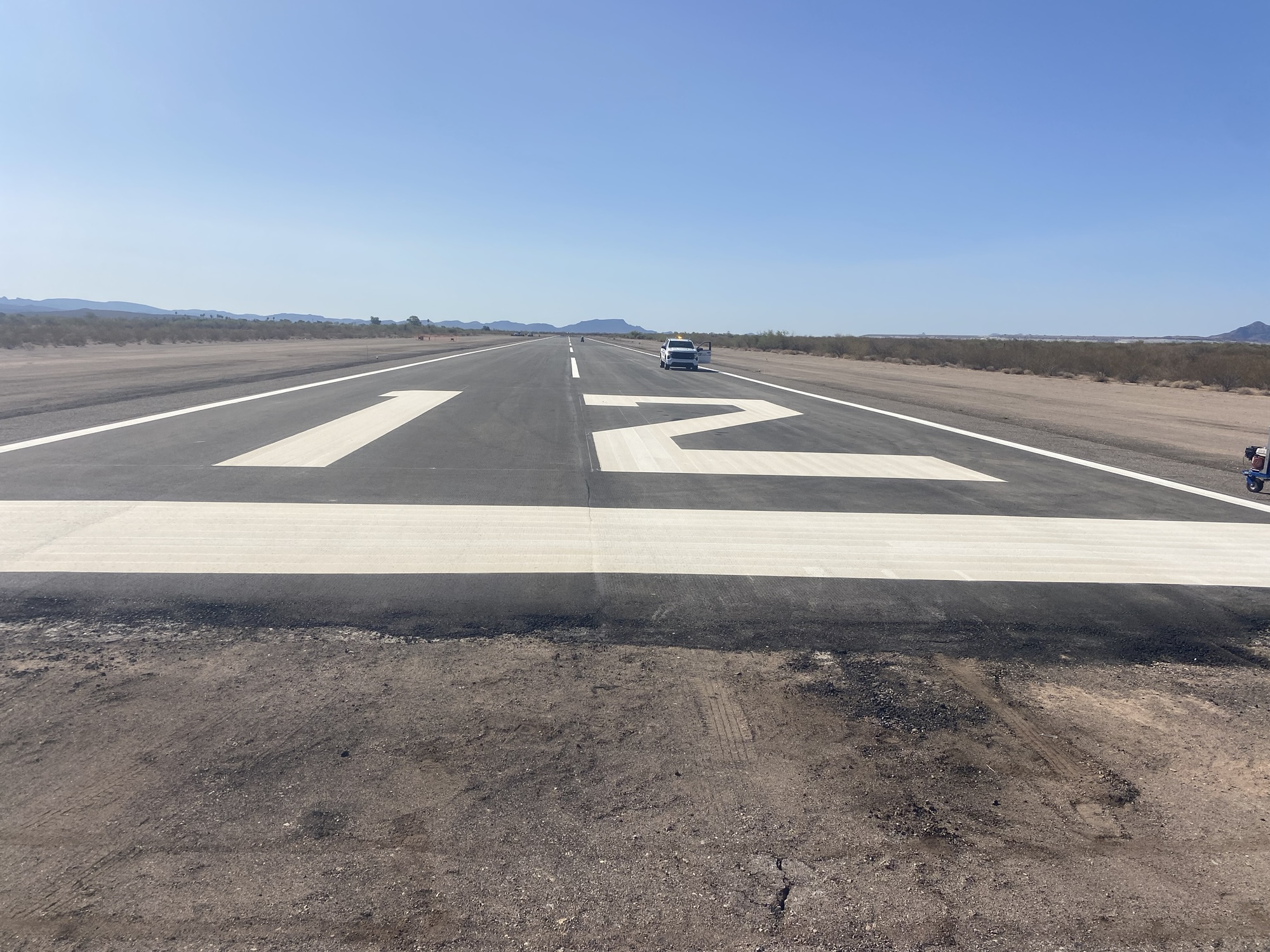
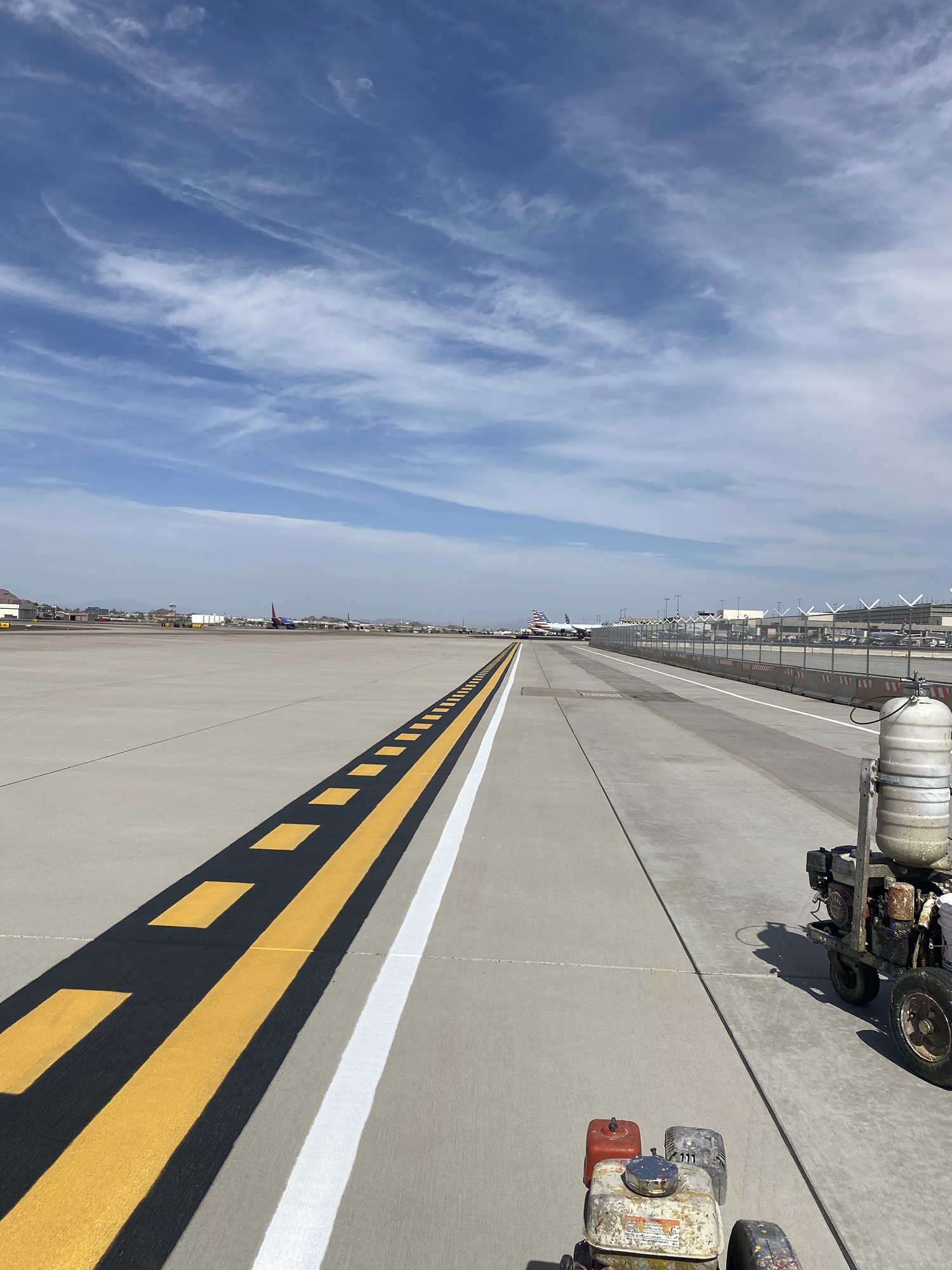
Pavement marking installation
COMPLIES WITH
FAA
MUTCD-A
MAG
AIRPORT SPEC

THE STANDARD

Understanding FAA AC 150/5340-1

Airfield markings are governed by FAA Advisory Circular 150/5340-1, the federal standard that dictates the dimensions, colors, patterns, placement, and reflectivity of every marking on a runway, taxiway, and apron. It is a fundamentally different discipline than commercial or roadway striping. On a parking lot, a line that’s a half-inch off or a shade of white that’s slightly dim is a cosmetic issue. On a runway, those same tolerances are safety-critical — pilots rely on marking geometry and retroreflectivity to orient at speed, in the dark, and in poor visibility.

Falcon installs to AC 150/5340-1 standards across every airfield project we take on. Our crews know the marking types, the required dimensions, the color standards, and the glass-bead application rates that keep an airfield compliant and safe. That fluency is what separates a certified airfield marking contractor from a striping company taking on airport work it isn’t equipped for.

Just as importantly, we can build to whatever specification a project requires. Many airfield projects follow AC 150/5340-1 directly; others use airport-specific, military, or engineer-provided specifications that modify or replace the federal standard. Whichever applies to your project, Falcon executes to the spec provided.

SCOPE

Runway, taxiway, and apron markings

Every surface of an airfield carries its own marking language, and Falcon installs across all of them.

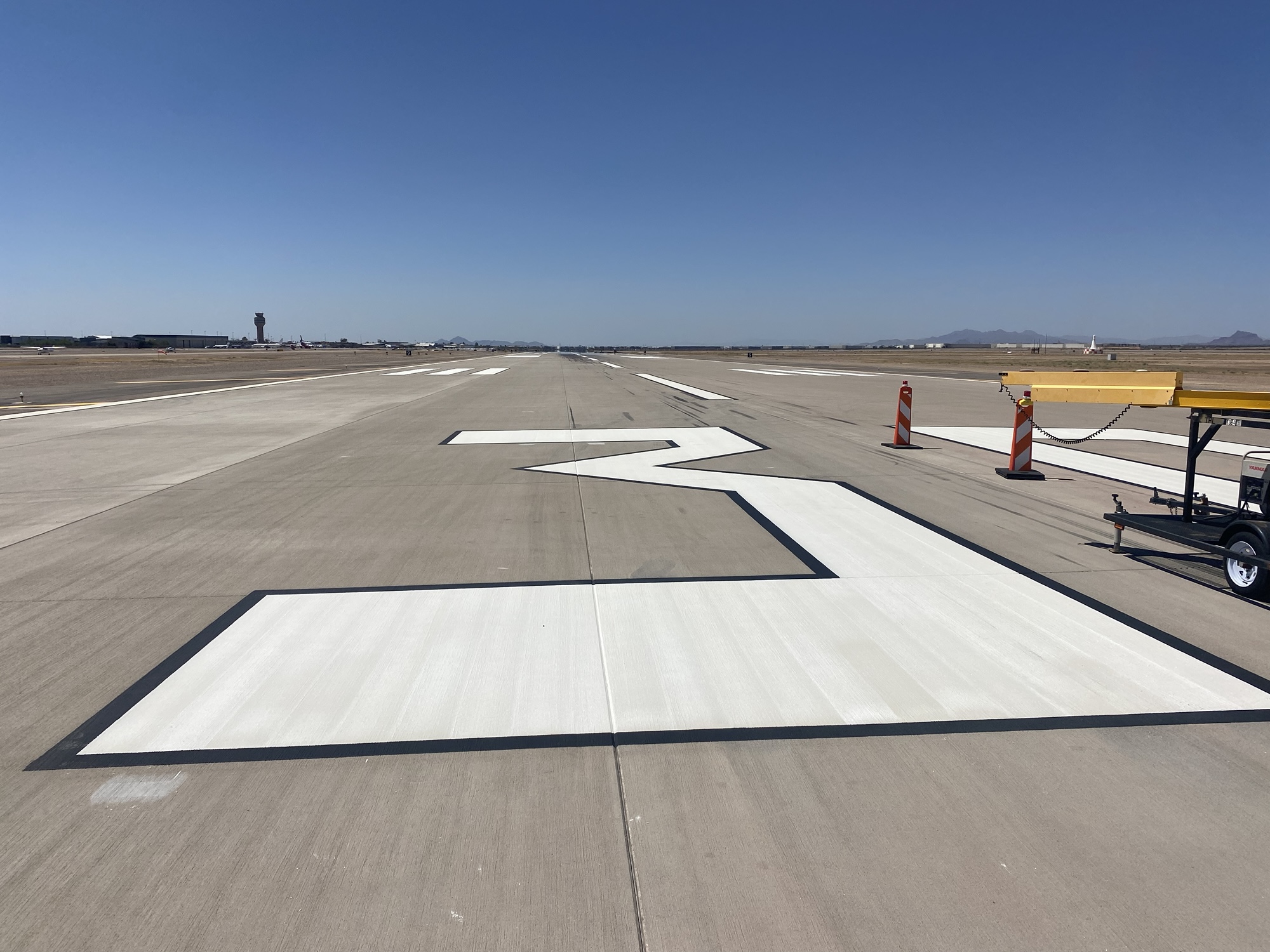
Runway markings are the most safety-critical work on the airfield. They include centerlines, threshold markings, touchdown zone markings, aiming points, runway designation numbers, edge lines, and displaced threshold arrows. These markings guide aircraft through the highest-speed, highest-consequence phases of flight, and they carry the tightest tolerances for dimension and retroreflectivity. We install them in glass-bead embedded paint and, where the project calls for a high-performance system, in AirMark®.

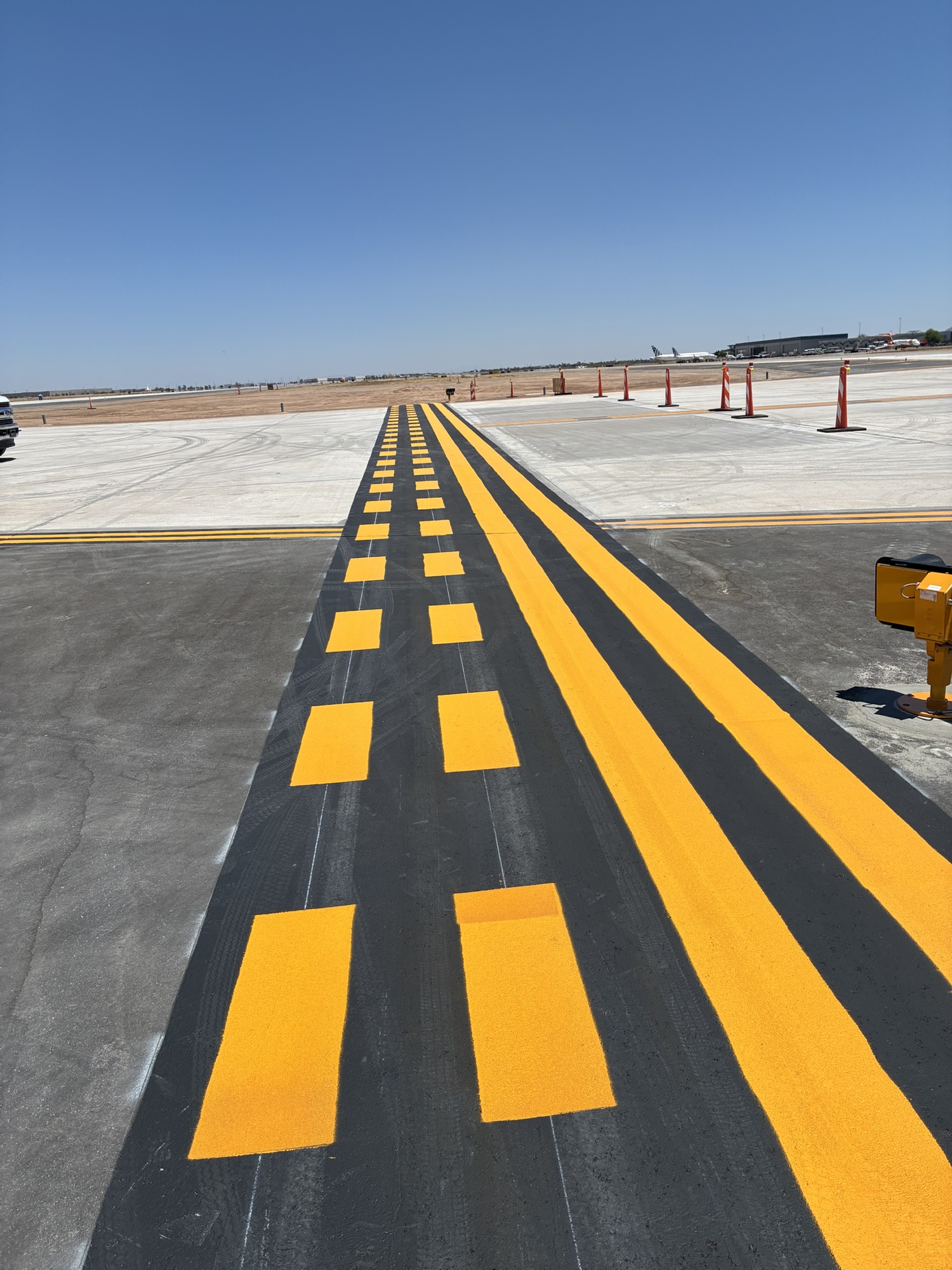
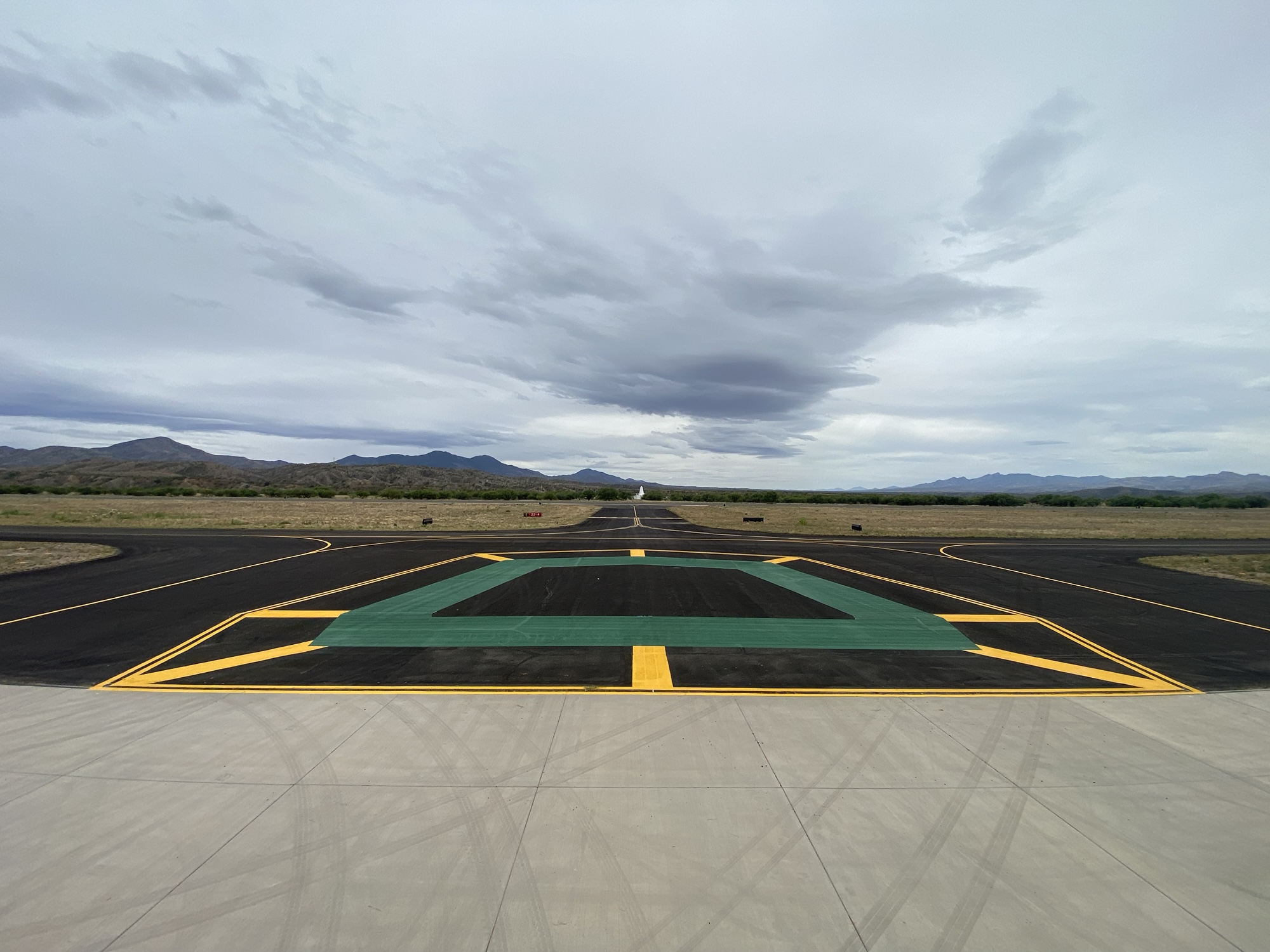
Taxiway markings guide aircraft safely between the runway and the ramp. They include taxiway centerlines, edge lines, holding position markings, geographic position markings, and ILS critical area boundaries. Holding position markings in particular are among the most important markings on any airfield — they define where an aircraft must stop before entering an active runway, and their accuracy is directly tied to runway-incursion prevention.

Apron and ramp markings organize the busiest and most congested areas of an airfield, where aircraft, fuel trucks, baggage equipment, and ground crews all share space. This work includes lead-in and lead-out lines, aircraft parking pads, vehicle service roads, equipment staging areas, and FBO ramp markings. Clear, accurate ramp markings keep ground operations orderly and safe.

Across all three surfaces, Falcon handles new markings on new pavement, remarking after rehabilitation, and layout changes — installed to the geometry and reflectivity the specification requires.

CAPABILITIES

What we stripe.

Runway Markings
Centerlines, edge lines, threshold markings, touchdown zones, aiming points. Glass-bead embedded paint.
Taxiway Markings
Centerlines, edge lines, holding position markings, geographic position markings, ILS critical area.
Apron & Ramp
Vehicle service roads, equipment staging, lead-in lines, parking pads, FBO ramp markings.
Threshold & Numbers
Runway designation numbers, threshold bars, displaced threshold arrows. Custom stencils.
Temporary & Final Markings
Construction work zones, displaced runway markings, temporary closures, blackout. Post-construction final marking after pavement rehab, expansion, or new airfield projects.

QUALITY ASSURANCE

Retroreflectivity testing & FOD control

Installing the marking is only part of the job. Proving it meets spec — and leaving the airfield clean — is what closes it out properly.

Falcon performs retroreflectivity testing on both roadway and airfield paint markings. Retroreflectivity is the measure of how well a marking returns light back to its source — the property that makes markings visible in a vehicle’s headlights or under an aircraft’s lighting at night. We take multiple readings in each direction as the specification requires, and we deliver a documented report, including a location image, so the airport, engineer, or general contractor has verified proof that the markings meet the required reflectivity thresholds. For airfield owners and GCs, that report is documentation that the work passed, not just a claim that it did.

We also perform FOD cleanup as part of our airfield work. FOD — Foreign Object Debris — is any loose material on an airfield that could be ingested by an engine or damage an aircraft, and excess glass beads from marking application are a common source. Falcon cleans up excess beads and marking debris so the airfield is returned to service clean and FOD-free. It’s a detail that general striping outfits routinely overlook, and one that airfield operators specifically watch for.

OPERATIONS

Night work on active airfields

Airfields rarely shut down for marking work. Most airfield marking happens in short overnight windows, phased closures, or between operations, and coordinating that safely takes experience most contractors don’t have.

Falcon’s crews are badged and have extensive experience working during active airfield operations. We understand the escort requirements, radio and coordination protocols, and movement-area restrictions that govern work on a live airfield, and we plan our sequencing to clear the work area and return it to operational status on schedule. When a project calls for temporary markings — displaced thresholds, work-zone markings, or interim configurations during construction — we install those too, then complete the permanent markings once the layout is set.

This is the part of airfield work that separates a qualified contractor from an unqualified one. The marking itself is a skill; doing it safely inside an operating airport, on the airport’s schedule and under its security requirements, is a different capability entirely — and it’s one Falcon has built over years of airfield projects.

FLEXIBILITY

Built to your specification

Falcon meets FAA AC 150/5340-1, but our capability isn’t limited to it. We build any project to the specification provided — whether that’s the federal standard, an airport-specific spec, a military installation’s requirements, or an engineer’s project documents. Airfield requirements vary between civil, commercial, and military installations, and the contractor’s job is to execute precisely to whatever governs the project in front of them. Hand us the spec, and we build to it.

MATERIALS

Right material for the job.

Paint
Water-based. Standard for parking lots and short-term work.
Thermoplastic
Hot-applied, glass-bead embedded. Long lifespan for roads and high-traffic areas.
Preformed
Pre-cut thermoplastic shapes — arrows, symbols, legends. Heat-bonded to pavement.
Cold Tape
Two-part polymer, no heat required. High durability for demanding surfaces.
RECENT WORK

Airport marking projects.

WHY FALCON

Why we get the call.

FAA
SPEC EXPERTS
Decades of FAA compliant work.
AMP
CERTIFIED
One of few AMP-certified shops in the SW.
100%
NIGHT-CAPABLE
We work the windows the airports give us.
0
DELAYS
Bonded, insured, badged crews ready to mobilize.

EXPERIENCE

Airfield work across Arizona and beyond

Falcon has performed extensive airfield marking work at Phoenix Sky Harbor International Airport, including projects on Taxiway U and T3N2, and a series of hold bar projects across the North, South, and Center areas of the airfield — the Center project currently in progress. Hold bars are among the most safety-critical markings on any airfield, and being trusted with multiple hold bar projects at an airport the size of Sky Harbor reflects the level of confidence airport operations places in our crews.

Beyond Sky Harbor, we’ve completed runway work at Chandler Municipal Airport, including Runway 4R-22L, and multiple projects at Phoenix-Mesa Gateway Airport. We’ve also performed airfield work at military installations, including Air Force base and Marine Corps air station projects — work that requires the security clearances, coordination, and precision that military airfields demand.

This depth of airfield experience is Falcon’s strongest credential, and it’s the kind of proof no general striping contractor can offer. When an airport or general contractor needs airfield marking done right, on schedule, and to spec, this track record is why they call us.

QUESTIONS

Airport Marking FAQs

What standards do airport pavement markings have to meet?
Airfield markings follow FAA Advisory Circular 150/5340-1, which governs the dimensions, colors, placement, and retroreflectivity of every runway, taxiway, and apron marking. Falcon installs to AC 150 standards across Arizona, and our crews are trained specifically for the tolerances airfield work demands — which are far tighter than commercial or roadway striping.
What's the difference between standard airport markings and AirMark®?
Standard airport markings use FAA-compliant paint and glass beads suited to most runway, taxiway, and apron work. AirMark® is a separate high-performance system with its own installer certification, used where longer lifespan and higher retroreflectivity are required. Falcon is certified — see our AirMark® page for that specialized work.
Can you do airfield marking work at night or during active operations?
Yes. Most airport marking work happens in short overnight windows or phased closures to keep the airfield operational. Falcon's crews are equipped for night work and experienced coordinating around active operations, escorts, and badging requirements at secured airfields.
Do you handle temporary runway and taxiway markings during construction?
Yes. Construction phasing often requires temporary markings, displaced thresholds, and closure markings that get removed once the permanent layout is set. Falcon installs both the temporary work-zone markings and the final markings after construction is complete.
Do you remove old airfield markings and rubber buildup?
Yes. We handle obliteration of outdated markings and rubber removal in runway touchdown zones, which restores surface friction and prepares the pavement for new markings. Removal is a distinct capability from installation and is often required before a restripe or layout change.

Need an airport marking quote?

Or call 602-944-3614